
Stop fighting Business Manager flags and start scaling with a $20–$50 CPM arbitrage strategy for wellness products.
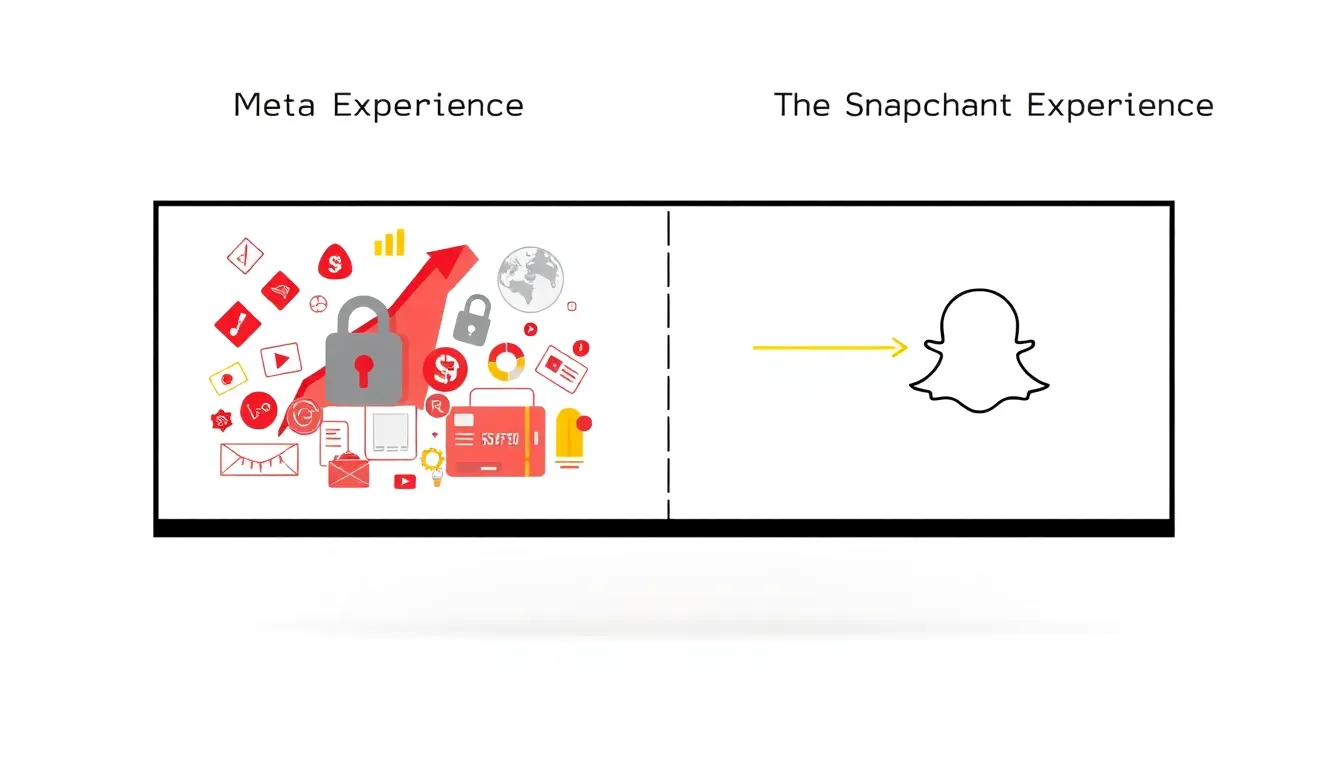
For most DTC supplement brands, Meta has become a high-stakes gamble. Between endless Business Manager flags and skyrocketing CPMs that frequently hit the $150–$350 range, the cost of customer acquisition is cannibalizing your margins. You aren't just fighting an algorithm; you're fighting a mathematical ceiling that makes scaling nearly impossible.
The solution isn't more troubleshooting—it's arbitrage. By pivoting spend toward Snapchat, where CPMs often hover between $20 and $50, brands can stop the margin bleed and reclaim their growth.
The Math of Inefficiency: Why Meta is Killing Your Margins
The math is brutal: when your CPMs hit $250 on Meta, you are paying a massive premium just for the opportunity to be seen. For a supplement brand, this creates a ceiling where even a high-converting creative cannot offset the cost of the impression. To get 10,000 impressions on Meta, you might spend $2,500; on Snapchat, that same reach costs roughly $300 to $500.
This disparity transforms your marketing from a growth engine into a liability. Many founders waste dozens of hours fighting Business Manager flags or migrating accounts to "trick" the algorithm, but the ROI on that effort is negligible.
- Meta: $150–$350 CPM (High friction, high cost)
- Snapchat: $20–$50 CPM (Low friction, high volume)
Diversifying your channel spend isn't just a hedge against account bans—it is a mathematical necessity to protect your margins.
The Snapchat Arbitrage: Leveraging High-Intent Wellness Demographics
The misconception that Snapchat is only for teenagers is a goldmine for supplement brands. The 18–34 demographic on the platform is increasingly health-conscious, seeking rapid, visual proof of efficacy. Because the environment is less saturated than Meta, broad targeting often outperforms hyper-segmentation. When you leverage Story Ads—which integrate seamlessly into the user's natural browsing flow—you can achieve a lean conversion benchmark: roughly two sales for every 50 clicks.
To maximize this arbitrage, focus on high-engagement formats:
- Story Ads: Use raw, UGC-style video that mimics a friend's recommendation to lower psychological barriers to purchase.
- AR Lenses: Create interactive "wellness checks" or product visualizers that turn passive viewers into active participants.
By prioritizing these high-intent drivers, brands can maintain a high conversion velocity while keeping acquisition costs a fraction of what they are on Facebook or Instagram.
The Migration Blueprint: Moving Spend Without Breaking Cash Flow
To migrate your spend without risking cash flow, start by diverting 10-20% of your Meta budget into a "test bucket" on Snapchat. Begin with the technical foundation: install the Snapchat Pixel and configure your conversion events immediately to ensure the algorithm has a clear feedback loop for optimization.
Avoid the temptation to over-segment. Deploy broad targeting tests—focusing only on age (18-34) and gender—to let the platform identify your highest-converting pockets of users. Monitor your initial conversion velocity daily. Once you hit your target CPA and see a consistent "2 sales per 50 clicks" ratio, scale the budget in 20% increments every 48 hours. This phased approach ensures you only scale winning creatives while keeping your overall blended CAC stable.
Conclusion
The math is clear: fighting for visibility on Meta is becoming a war of attrition. While perfectionism in creative can feel like the priority, speed of execution is what actually protects your margins. Start with a modest budget test to validate these lower CPMs and witness the conversion velocity of a fresh, high-intent audience.
Diversifying your spend now isn't just about arbitrage—it's about insurance. Don't wait for the next algorithm shift to leave you stranded; build your hedge today.