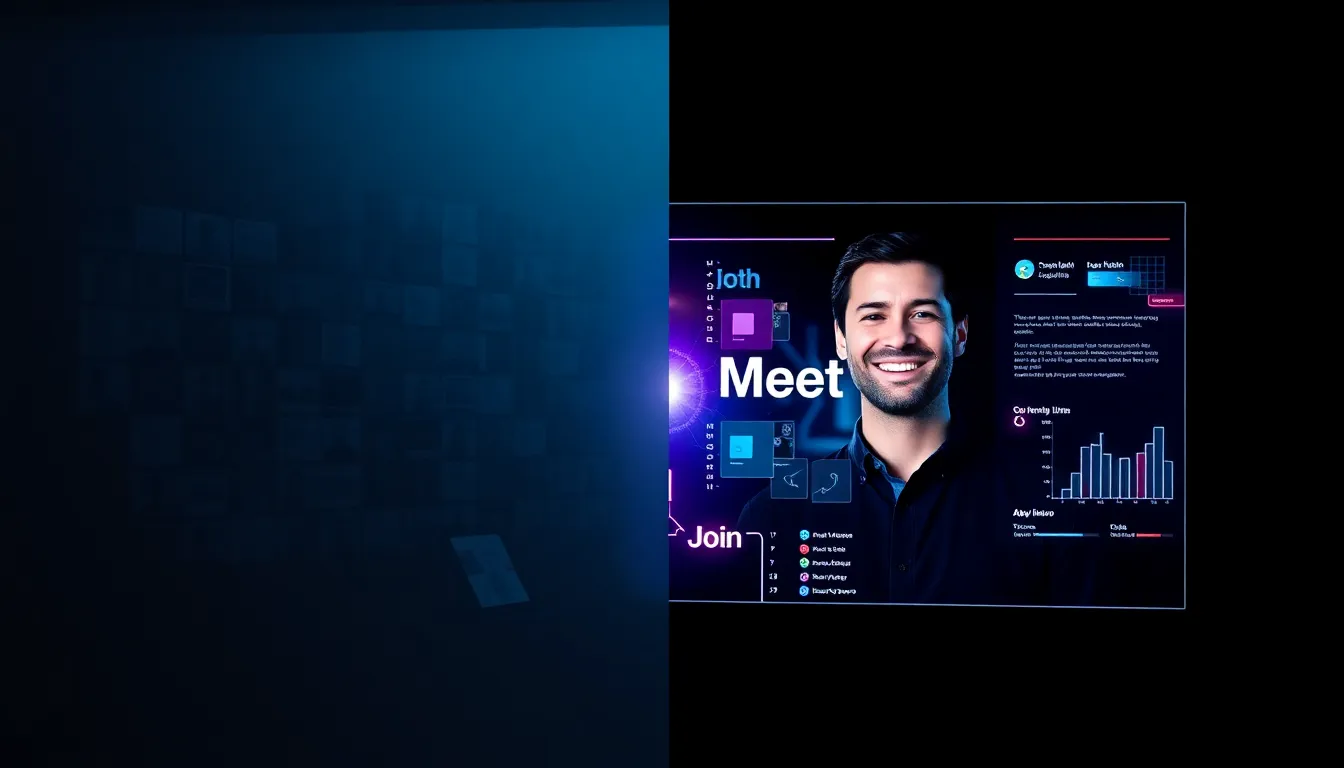
How to break the template trap and build high-signal 'Meet John' slides 10x faster with adaptive AI.
You know the feeling: you’re chasing that polished, high-signal aesthetic championed by Jason Calacanis and Founder University, but you’re spending four hours fighting a PowerPoint layout instead of refining your business. The "template hunt" is a seductive waste of time, promising a shortcut to professional credibility while trapping you in a rigid grid of text boxes.
This is the Template Trap. When you force your unique user insights into a pre-set box, you sacrifice narrative velocity for mindless formatting.
The Template Trap: Why 'Fill-in-the-Blanks' Kills Your Narrative
The psychological cost of the template trap is a shift from storytelling to data entry. When you use a rigid "fill-in-the-blanks" layout, your brain stops asking, "How do I make the investor feel the user's pain?" and starts asking, "Will this sentence fit in the box?" This operational friction creates a robotic narrative where the design dictates the insight, rather than the insight driving the design.
Consider the classic "Meet John" slide. A template might force you into a generic grid of "Demographics," "Goals," and "Frustrations." By the time you’ve squeezed your nuanced user research into these constraints, "John" is no longer a living, breathing customer—he’s a caricature. You lose the emotional resonance and the specific "aha!" moment that proves product-market fit, leaving investors with a sterile checklist instead of a compelling human story.
The Strategy Shift: Moving from Rigid Layouts to Adaptive Design
To break this cycle, you must shift your workflow from a search-and-force model to a narrative-first approach. The traditional process is a linear struggle: you search for a template, download a static file, and then force-fit your data into a rigid layout. This puts the design in the driver's seat, forcing you to edit your insights to fit the pixels.
The AI-driven alternative flips this script. Instead of starting with a layout, you start with the narrative. Using a tool like Beautiful.ai, the mechanism shifts to adaptive design. As you add a key insight or a new user pain point, the smart slides adjust in real-time—automatically resizing elements and repositioning text to maintain visual balance.
This means the story dictates the design. You can iterate on "John's" motivations instantly without spending twenty minutes manually shifting text boxes, ensuring your pitch deck remains a high-signal communication tool rather than a formatting chore.
Building a Venture-Ready Persona Slide in Minutes
To build a venture-ready persona slide, start by feeding your raw user research—the specific pain points, behavioral triggers, and "jobs to be done"—directly into an adaptive AI slide. Avoid the urge to polish the prose first; instead, input the high-signal data points that prove your customer's urgency.
Use a smart layout to organize these insights. As you add a critical quote or a key demographic, the AI handles the alignment and spacing instantly. This allows you to iterate through three or four versions of "John" in the time it would normally take to move a single text box in PowerPoint.
The result is a professional, Founder University-standard slide that prioritizes clarity over clutter. By eliminating manual formatting, you can spend your energy refining the narrative arc, ensuring the "Meet John" slide serves as a bridge to your solution rather than a static biography.
Conclusion
Stop hunting for the perfect layout and start focusing on the narrative that wins funding. When you shift from the role of a manual designer to a strategic storyteller, you stop fighting with text boxes and start refining your signal.
By leveraging Beautiful.ai, you can bypass the template trap and generate venture-ready persona slides in minutes. Stop searching for the right frame and start building a story that converts. Your vision is too important to be limited by a template.